News and Events
- NEWS
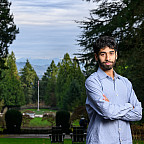
AI Helps Students ‘Take the Hint’
Ishan Abraham BA ’26 and a team of collaborators are developing an AI-powered learning system that delivers hints during hands-on cybersecurity exercises. Their work will be presented at next year’s 21st International Conference on Cyber Warfare and Security in Wilmington, North Carolina.

National Cyber League (NCL) Fall 2025 Competition Season
It is with esteemed pleasure that we recognize the students and faculty from Lewis & Clark College for their prestigious efforts during the National Cyber League (NCL) Fall 2025 Competition Season.
The NCL, powered by Cyber Skyline, is a cybersecurity skills competition that contains real-world cybersecurity tasks that professionals perform on a daily basis. Students who participate in the NCL reinforce their learning and develop the necessary skills for the workforce. Students also earn a skills report that recognizes their abilities and can be shown to an employer to demonstrate the student’s readiness for the job, further bridging the gap from curriculum to careers.
Students from Lewis & Clark College, coached by Professor Jens Mache, participated in individual and team-based events and the school placed #87 nationally in the Cyber Power Rankings among over 8,520 students from 490 colleges and universities in the NCL Fall 2025 Season.
Their collaborative effort and dedication to the NCL Competition is worthy of praise and recognition. It is with our highest recommendation that students from Lewis & Clark College be recognized for their admirable achievement that showcased their individual skills, collaborative performance, and desire to grow and learn as cybersecurity professionals. We would also recommend the recognition of Professor Jens Mache for their dedication, support, and encouragement that has enabled the success of the students from Lewis & Clark College.
We appreciate your time and consideration to acknowledge these well-deserving students and faculty in their incredible efforts for the NCL Fall 2025 Season.
Dr. David Zeichick
NCL Commissioner
From Lab to Launch
Lewis & Clark’s John S. Rogers Science Research Program gave these young alumni scientists the skills—and the confidence—to soar into graduate programs nationwide.
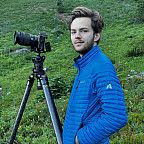
Nicholas Dill Wins College’s Highest Honor
Nicholas Dill BA ’25, who double majored in mathematics and computer science, received the 2025 Rena J. Ratte Award, the undergraduate college’s highest honor. Named for an esteemed professor, the award recognizes a senior whose abilities and commitment have combined to produce work of the highest distinction.
2025 Project Descriptions for the Rogers Program
Summer science research opportunities
- EVENTS
Past Events

Computer Science Colloquium
Cryptographically Verified AI/ML Audits
Is this company’s AI/ML model biased? Are its predictions reliable? Are they using my data responsibly? As AI/ML is deployed in sensitive applications, it is increasingly important to audit models to ensure that they uphold societal values. However, AI/ML service providers almost never release their models or data to other parties for auditing due to intellectual property and data privacy issues. My work aims to address this tension through privacy-preserving cryptographic ‘contracts’ which can bind service providers’ models. These contracts use zero-knowledge proofs and secure multiparty computation to guarantee that (i) the model satisfies an important property such as group fairness, robustness, or differential privacy; (ii) outside parties can view the contract to verify whether the model has the property, but they learn no information about the model parameters or data by doing so. Cryptographic verification is powerful but computationally expensive, especially for larger models. In this talk I will introduce a variety of optimization strategies that I’ve employed in my research to enable this critical emerging approach to AI/ML regulation.

Octilinear Flight Lines – Overview – a fast 2D metric MST technique
In this talk, we present some original computational geometry research providing an O(n*lg(n)) scanline algorithm for creating a close-enough-to-Euclidean minimum spanning tree (MST) for (overlapping) 2D shapes. It was deployed in production to create visual flight lines in a chip layout editor to graphically illustrate the logically but not yet physically connected elements. Talk includes the tricky non-Euclidean geometry proof that it gets the right answer. It replaced a too-simple solution that took hours to run with a fast approximate solution that takes seconds to complete.
We’ll talk about metric space norms, including octilinear, and visually compare with L1 (Manhattan), L2 (Euclidean), and L∞ (Chebyshev); justify how we create a valid sparse underlying spanning graph from which we build the minimum spanning tree; and show that the straight-forward Nearest Neighbor heuristic does not always work. We show how we break the 2D problem into 1D pieces, most of which can be done in parallel, substantially improving performance in the real World.Computer Science Colloquium
Join us for a colloquium on Justice-Centered Educational Programming Languages.