
Majors
Minors
- <a href="/live/image/gid/317/width/650/110632_CAS-0325_PHYS_201_Experimental_Methods-2892.jpg" class="lw_preview_image lw_disable_preview" tabindex="-1"><picture class="lw_image lw_image110632"><source media="(max-width: 500px)" type="image/webp" srcset="/live/image/scale/2x/gid/317/width/500/height/479/crop/1/110632_CAS-0325_PHYS_201_Experimental_Methods-2892.rev.1767660203.webp 2x, /live/image/scale/3x/gid/317/width/500/height/479/crop/1/110632_CAS-0325_PHYS_201_Experimental_Methods-2892.rev.1767660203.webp 3x" data-origin="responsive"/><source media="(max-width: 500px)" type="image/jpeg" srcset="/live/image/scale/2x/gid/317/width/500/height/479/crop/1/110632_CAS-0325_PHYS_201_Experimental_Methods-2892.rev.1767660203.jpg 2x, /live/image/scale/3x/gid/317/width/500/height/479/crop/1/110632_CAS-0325_PHYS_201_Experimental_Methods-2892.rev.1767660203.jpg 3x" data-origin="responsive"/><source media="(min-width: 501px)" type="image/webp" srcset="/live/image/scale/2x/gid/317/width/720/height/690/crop/1/110632_CAS-0325_PHYS_201_Experimental_Methods-2892.rev.1767660203.webp 2x, /live/image/scale/3x/gid/317/width/720/height/690/crop/1/110632_CAS-0325_PHYS_201_Experimental_Methods-2892.rev.1767660203.webp 3x" data-origin="responsive"/><source media="(min-width: 501px)" type="image/jpeg" srcset="/live/image/scale/2x/gid/317/width/720/height/690/crop/1/110632_CAS-0325_PHYS_201_Experimental_Methods-2892.rev.1767660203.jpg 2x, /live/image/scale/3x/gid/317/width/720/height/690/crop/1/110632_CAS-0325_PHYS_201_Experimental_Methods-2892.rev.1767660203.jpg 3x" data-origin="responsive"/><img src="/live/image/gid/317/width/720/height/690/crop/1/110632_CAS-0325_PHYS_201_Experimental_Methods-2892.rev.1767660203.jpg" alt="Students working at a lab table." width="720" height="690" srcset="/live/image/scale/2x/gid/317/width/720/height/690/crop/1/110632_CAS-0325_PHYS_201_Experimental_Methods-2892.rev.1767660203.jpg 2x, /live/image/scale/3x/gid/317/width/720/height/690/crop/1/110632_CAS-0325_PHYS_201_Experimental_Methods-2892.rev.1767660203.jpg 3x" data-max-w="3200" data-max-h="2133" loading="lazy" data-optimized="true"/></picture></a> <div class="hero-split_image_caption collapsable-caption">The John S. Rogers Summer Research Program gives students <span style="font-weight: 400;">the opportunity to participate in full-time paid summer research experiences.</span></div>
- <a href="/live/image/gid/317/width/650/110633_CAS-0325_PHYS_201_Experimental_Methods-3109.jpg" class="lw_preview_image lw_disable_preview" tabindex="-1"><picture class="lw_image lw_image110633"><source media="(max-width: 500px)" type="image/webp" srcset="/live/image/scale/2x/gid/317/width/500/height/479/crop/1/110633_CAS-0325_PHYS_201_Experimental_Methods-3109.rev.1767660204.webp 2x, /live/image/scale/3x/gid/317/width/500/height/479/crop/1/110633_CAS-0325_PHYS_201_Experimental_Methods-3109.rev.1767660204.webp 3x" data-origin="responsive"/><source media="(max-width: 500px)" type="image/jpeg" srcset="/live/image/scale/2x/gid/317/width/500/height/479/crop/1/110633_CAS-0325_PHYS_201_Experimental_Methods-3109.rev.1767660204.jpg 2x, /live/image/scale/3x/gid/317/width/500/height/479/crop/1/110633_CAS-0325_PHYS_201_Experimental_Methods-3109.rev.1767660204.jpg 3x" data-origin="responsive"/><source media="(min-width: 501px)" type="image/webp" srcset="/live/image/scale/2x/gid/317/width/720/height/690/crop/1/110633_CAS-0325_PHYS_201_Experimental_Methods-3109.rev.1767660204.webp 2x, /live/image/scale/3x/gid/317/width/720/height/690/crop/1/110633_CAS-0325_PHYS_201_Experimental_Methods-3109.rev.1767660204.webp 3x" data-origin="responsive"/><source media="(min-width: 501px)" type="image/jpeg" srcset="/live/image/scale/2x/gid/317/width/720/height/690/crop/1/110633_CAS-0325_PHYS_201_Experimental_Methods-3109.rev.1767660204.jpg 2x, /live/image/scale/3x/gid/317/width/720/height/690/crop/1/110633_CAS-0325_PHYS_201_Experimental_Methods-3109.rev.1767660204.jpg 3x" data-origin="responsive"/><img src="/live/image/gid/317/width/720/height/690/crop/1/110633_CAS-0325_PHYS_201_Experimental_Methods-3109.rev.1767660204.jpg" alt="Three students sitting at a table working on research together on a computer." width="720" height="690" srcset="/live/image/scale/2x/gid/317/width/720/height/690/crop/1/110633_CAS-0325_PHYS_201_Experimental_Methods-3109.rev.1767660204.jpg 2x, /live/image/scale/3x/gid/317/width/720/height/690/crop/1/110633_CAS-0325_PHYS_201_Experimental_Methods-3109.rev.1767660204.jpg 3x" data-max-w="3200" data-max-h="2136" loading="lazy" data-optimized="true"/></picture></a> <div class="hero-split_image_caption collapsable-caption">The John S. Rogers Science Research Program gives students <span style="font-weight: 400;">the opportunity to participate in full-time paid summer research experiences.</span></div>
- <a href="/live/image/gid/317/width/650/110631_CAS-0325_PHYS_201_Experimental_Methods-apparatus-3695.jpg" class="lw_preview_image lw_disable_preview" tabindex="-1"><picture class="lw_image lw_image110631"><source media="(max-width: 500px)" type="image/webp" srcset="/live/image/scale/2x/gid/317/width/500/height/479/crop/1/110631_CAS-0325_PHYS_201_Experimental_Methods-apparatus-3695.rev.1767660203.webp 2x, /live/image/scale/3x/gid/317/width/500/height/479/crop/1/110631_CAS-0325_PHYS_201_Experimental_Methods-apparatus-3695.rev.1767660203.webp 3x" data-origin="responsive"/><source media="(max-width: 500px)" type="image/jpeg" srcset="/live/image/scale/2x/gid/317/width/500/height/479/crop/1/110631_CAS-0325_PHYS_201_Experimental_Methods-apparatus-3695.rev.1767660203.jpg 2x, /live/image/scale/3x/gid/317/width/500/height/479/crop/1/110631_CAS-0325_PHYS_201_Experimental_Methods-apparatus-3695.rev.1767660203.jpg 3x" data-origin="responsive"/><source media="(min-width: 501px)" type="image/webp" srcset="/live/image/scale/2x/gid/317/width/720/height/690/crop/1/110631_CAS-0325_PHYS_201_Experimental_Methods-apparatus-3695.rev.1767660203.webp 2x, /live/image/scale/3x/gid/317/width/720/height/690/crop/1/110631_CAS-0325_PHYS_201_Experimental_Methods-apparatus-3695.rev.1767660203.webp 3x" data-origin="responsive"/><source media="(min-width: 501px)" type="image/jpeg" srcset="/live/image/scale/2x/gid/317/width/720/height/690/crop/1/110631_CAS-0325_PHYS_201_Experimental_Methods-apparatus-3695.rev.1767660203.jpg 2x, /live/image/scale/3x/gid/317/width/720/height/690/crop/1/110631_CAS-0325_PHYS_201_Experimental_Methods-apparatus-3695.rev.1767660203.jpg 3x" data-origin="responsive"/><img src="/live/image/gid/317/width/720/height/690/crop/1/110631_CAS-0325_PHYS_201_Experimental_Methods-apparatus-3695.rev.1767660203.jpg" alt="A professor working on a large metal instrument." width="720" height="690" srcset="/live/image/scale/2x/gid/317/width/720/height/690/crop/1/110631_CAS-0325_PHYS_201_Experimental_Methods-apparatus-3695.rev.1767660203.jpg 2x, /live/image/scale/3x/gid/317/width/720/height/690/crop/1/110631_CAS-0325_PHYS_201_Experimental_Methods-apparatus-3695.rev.1767660203.jpg 3x" data-max-w="3200" data-max-h="2133" loading="lazy" data-optimized="true"/></picture></a> <div class="hero-split_image_caption collapsable-caption">Assistant Professor of Physics Ben Olsen with “The Apparatus.”</div>
Engineering Pathways
Start your engineering journey at Lewis & Clark, where a strong liberal arts foundation meets clear pathways to top schools. You will build essential STEM skills in small, supportive classes before completing specialized engineering study at a partner university. Graduate with two bachelor’s degrees and the skills employers and graduate programs look for.
Majors
Minors
Why Choose Lewis & Clark for Engineering?
Lewis & Clark teaches the habits of mind essential to engineering, like how to think critically about complex issues and how to identify, define, and solve problems. Our cooperative partnership, commonly referred to as the “3-2 program,” with two nationally recognized engineering schools (Columbia University in New York and Washington University in Saint Louis) will provide you with all of the advantages of a liberal arts education as a complement to rigorous studies in engineering.
Our engineering pathway program means you will earn a bachelor of arts (BA) degree from Lewis & Clark and a bachelor of science (BS) degree from the partner school.
I recommend the dual degree program highly. Dual degree students at the engineering school were better thinkers and writers than those who went through the traditional engineering curriculum.
Sean Raffuse ’01 Sonoma Technology Inc.
Connect With Lewis & Clark!
After you hit submit, we will follow up with information about L&C, and you will have the opportunity to share a bit more about yourself.
What You’ll Study
As a pre-engineering student, you will complete the necessary STEM courses (like calculus, physics, and computer science) needed in preparation for engineering school. You will also be able to take full advantage of Lewis & Clark’s diverse course offerings in the arts, humanities, and social sciences during your studies. Read through the engineering Catalog listing for more information.
Complement Your Education With One of These Majors
Because Lewis & Clark does not offer an engineering major, you must choose between mathematics, chemistry, physics, or economics. While working with your pre-engineering advisor, you will plan a course of study that will enables you to meet the requirements of the engineering school and complete all but two or three courses of those required for your Lewis & Clark major. You will also need to complete all of Lewis & Clark’s General Education requirements.
Personalized Advising and Mentorship
From your first semester, you’ll have access to our dedicated pre-engineering advisor, Stephen Tufte, who will help you map your courses, choose between partner programs, and prepare for your future.
Find Your People
Our students interested in engineering participate in a wide variety of cocurricular programs at Lewis & Clark, including the Math Club and Physics Club.
After Lewis & Clark
Our graduates aren’t just technically qualified—they’re thoughtful leaders, clear communicators, and adaptable problem solvers. These are the habits of mind that top engineering schools and employers value.
Dedicated Faculty
Our expert professors are your expert mentors. You will learn directly from faculty (no graduate assistants here!) that are nationally recognized in their fields of study and who love to work with and learn from their students. Your professors will inspire you to be a thoughtful and passionate participant in a diverse world. Your small classes will support you as you explore new ideas, find your voice, and speak your truth.
96%
Within six months of graduation, 96% of the Lewis & Clark Class of 2024 was already changing the world through employment (71%), continuing studies (22%), and service work (3%), like the Peace Corps.
100%
All entering first-year students in 2025 received aid through scholarships.
4-5-6
Lewis & Clark’s 4-5-6 Commitment can help you make the most of your future.
Invest in Yourself
A private liberal arts education is often more affordable than you think. Last year, Lewis & Clark distributed over $74 million in assistance from institutional, federal, state, and private sources. Additionally, we’re so confident that our first-year students will graduate with their bachelor of arts degree in four years that if you don’t, we’ll cover the extra semester of tuition.
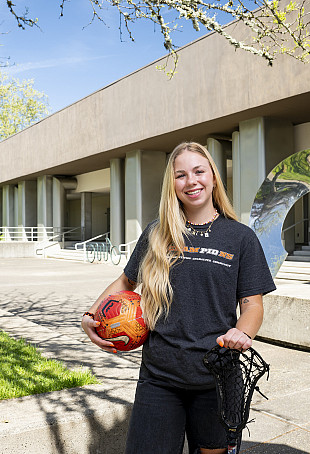
- Lauren Dressler BA ’23
My physics major taught me to approach problems systematically, using mathematics as a language to describe the observable world. Meanwhile in my math major, I learned to think about that language more deeply.
Physics, Math | Los Angeles, CaliforniaMore about Lauren - Joy Pajarla BA ’21
I majored in physics because I am fascinated by the patterns and synergies found in natural phenomena. I wanted to learn the language of these dynamics and how it is elegantly encoded in the world around us.
Physics | Philosophy | Surprise, ArizonaMore about Joy - Kate Meinhard BA ’26
The lab work we do really cemented the material we learned in class and shows us how what we learned in class could be seen in real life.
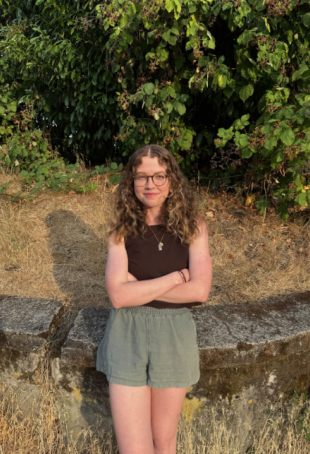
Physics | Studio Art, Mathematics | Cleveland, OhioMore about Kate
Lewis & Clark Engineering Pathways FAQ
No, but Lewis & Clark does offer a 3-2 Engineering Program. Students complete three years of liberal arts and sciences study on campus, and then transfer to a partner engineering school for two years to earn a second bachelor’s degree.
Liberal arts coursework enhances problem-solving, communication, and creative thinking, essential for success in engineering careers and graduate programs.
Office of the Dean of the College is located in room 201 of Albany on the Undergraduate Campus.
MSC: 47
email casdean@lclark.edu
voice 503-768-7100
Dean Bruce Suttmeier
Office of the Dean of the College
Lewis & Clark
615 S. Palatine Hill Road
Portland OR 97219


