While college can be enjoyable, it can also get difficult at times. As the Antarctic Midge has survived for over 30 million years by banding together, so too will you, and your friends need to support one another.
Pronouns
He/Him
Degree and Class Year
BA ’26
Hometown
Otaru, Hokkaido
Major
Biology
Minor
Neuroscience
Extracurriculars
Japan Club board member, Shorinji Kempo East
What three words would you use to describe L&C?
Adventurous, Creative, Inclusive
Summer Internship 2025
What is your internship, and what are your basic duties?
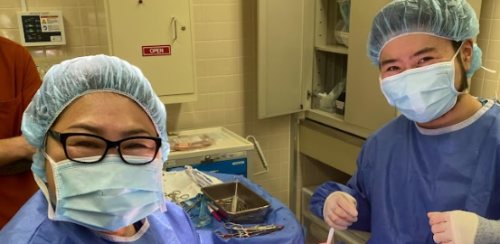
I completed my internship at three veterinary facilities in Japan, Misawa Veterinary Clinic, Kitasato University Veterinary Hospital, and Sakura Pet Clinic. As part of my SEDV project, I am also developing a case study paper based on a couple of the patients I followed closely. My daily duties included pre and post operative animal care, scrubbing in and assisting during surgeries, and attending veterinary examinations. I shadowed veterinarians in various departments and observed how different clinical cases were approached in different approaches.
How does this internship align with your interests and/or major?
My long term goal is to attend veterinary school, and this internship solidified that passion. Shadowing veterinary professionals allowed me to understand the daily challenges and responsibilities of animal healthcare, and it confirmed that this is the field I want to pursue in the future.
What’s the best part of your internship?
At Kitasato University, I was mainly assigned to the orthopedic surgery team. I found it incredibly rewarding to observe the recovery of dogs who had undergone major procedures, especially seeing them regain the ability to walk and even run after only a week.
At the general practice clinics, I enjoyed watching how veterinarians approached similar medical issues with unique perspectives, always finding their diagnosis and treatment to each individual patient. It taught me that veterinary medicine is not just science, but also creative problem solving requires rich and long experience.
What specific skills are you gaining?
Yukino Johnson with alum Dr Hisae Johnson BA ’91.I’ve gained experience in surgical preparation, sterile technique, holding animals, medication administration, and intensive post operative care. I also developed my observational and diagnostic reasoning skills by shadowing veterinarians during examinations and follow up care. Additionally, I improved my ability to communicate/translate clearly in a bilingual environment where I had encountered both patients who only spoke Japanese and others only spoke English, and learned how to maintain calm and compassion in high stress clinical settings for both workers and patients.
How do you see this internship leading to a career in your chosen field and aiding in your overall career development?
This internship not only gave me valuable real world insight into the daily operations of veterinary practice, but also helped me clarify which areas of the profession I am most passionate about. By rotating through different departments such as orthopedics, internal medicine, and general practice at kitasato university, I was able to compare various roles and responsibilities within the field. I discovered a strong interest in surgery and patient recovery, particularly in helping animals regain mobility and quality of life after serious injuries. This experience has strengthened my motivation to pursue veterinary school and has helped me better understand the practical skills and mindset I’ll need for a future career in veterinary medicine.
How has this internship influenced your understanding of the industry or field you’re pursuing
I’ve come to understand how varied and dynamic veterinary practice can be from highly technical procedures in university hospitals to the small animal clinics where patients come more often and build stronger connections with doctors and other workers. It also highlighted the emotional aspects of veterinary care, including communication with patients’ owners during difficult decisions like amputation or hospice care, and Euthanasia. This broader perspective has deepened my respect for the field and my commitment to it.
How has Lewis & Clark supported you in the process of finding and securing your internship?
My academic advisor helped me find the SEDV class, which has been incredibly helpful in understanding workplace communication, professional ethics, and the core values of working in a field we are passionate about.
Life at L&C
What’s your favorite class? Why?
Introduction to Neuroscience with Dr. Norma Velazquez was definitely my favorite! Such an amazing teacher but at the same time, she is one of the best scholar. It sparked my interest in neuroscience and changed my mind to minor in neuroscience instead of just my biology major. Not just the concept of this class, but the fact she graduated with a BS in Mexico motivated me to work hard as an international student.
What made you want to come to Lewis & Clark?
Both my parents and a few of my relatives graduated here, they often told me about the life they had here. So since I was little I was always dreaming about going to Lewis & Clark and spending four years at this esteemed institution, following in their footsteps and creating my own cherished memories!
What do you like or find most interesting about your major?
I like the fact that being a biology major gives me the flexibility to explore a wide range of scales, from the big scale of ecology to the intricate details of cell biology. Having multiple options gives me opportunities to try out different concepts and find the one I am really passionate about.
What do you like or find most interesting about your minor?
Many of the concepts covered in neuroscience class and the biology class overlap greatly, and drawing links between the two fields offers fresh perspectives on both biology and neuroscience. Despite having taken only a few classes so far, I am very excited to continue down this journey!
Tell us about your support systems and social outlets on campus: people, activities, clubs, res halls, etc.
As an international student, the ISS office has always helped me! They helped me with various things like paperwork and answering questions about U.S. culture when I needed guidance. And it’s a great place to meet other international students.
What advice do you have for incoming students?
While college can be enjoyable, it can also get difficult at times. As the Antarctic Midge has survived for over 30 million years by banding together, so too will you, and your friends need to support one another.
How did your financial aid package influence your decision to attend Lewis & Clark?
The fluctuating exchange rates between the yen and the dollar, coupled with inflation in the U.S., have certainly posed challenges to my family. However, despite these economic uncertainties, I was able to pursue my education in the U.S. because of financial aid.