A special opportunity to travel with President Robin Holmes-Sullivan.
Group Size: 14 to 18 participants
Overview
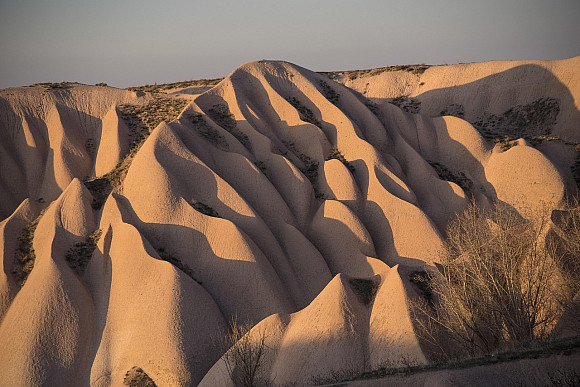
This small group tour travels through the diverse landscapes and history of Türkiye. We start in the dynamic city of Istanbul, a crossroads of continents and cultures. From there, we journey to the unique terrain of Cappadocia, known for its cave dwellings and hot air balloons, and then south to the beautiful Turquoise Coast for its beaches and blue waters. Throughout the trip, we will explore spectacular ancient ruins that tell the story of powerful civilizations, from the Neolithic temples of Göbekli Tepe to the grand classical city of Ephesus.
Highlights
Explore some of Turkey’s most iconic sites and experiences. Discover Istanbul’s Sultanahmet Area that encompasses the Blue Mosque, Tokapi Palace, Basilica Cistern, and Grand Bazaar. See the Roman ruins at Emphasis that include the Great Theater and Library of Celsius. Take in Capadocia’s unique cave dwellings and fairy chimneys.
Relax on this adventure including a cruise on the Bosporus River dividing Asia and Europe, set sail on a traditional gullet ship along the beautiful Turquoise Coast, and if you choose — float above Cappadocia’s moonscape on a hot air balloon.
Enjoy food experiences from wandering Istanbul’s Spence Market to excellent farm to table meals. Taste traditional Anatolian ingredients transformed by a highly acclaimed chef into examples of exciting modern cuisine. Grab a cocktail at famed Pera Palace Hotel Bar as if you were stepping into the Agatha Christie’s The Orient Express.
Unique experiences speaking with female leaders about women’s rights and transforming role in society. Meet with lawyers and advocates for free speech in Turkey. Dine at a local women’s cooperative.
Benefit from time with Professor Healy, delving into the history of the region and discussing contemporary issues. Join a group of travelers with an adventurous spirit and curious mind. Enjoy a special Lewis & Clark journey in the company of President Robin Holmes-Sullivan.
Itinerary
Most participants will depart from the USA today.
Please note there are two major airports that serve Istanbul — Istanbul Airport (IST), Sabiha Gökçen International Airport (SAW).
If you would like to arrive a day or two early please let us know so we can quote you the cost of additional nights and a transfer.
D (Dinner included Today)
Upon arrival in Istanbul, you will be met and transferred to the Hotel Amira, a charming boutique hotel situated in the heart of Sultanahmet, the historic district of Istanbul. Just a short walk from iconic landmarks like the Blue Mosque, Hagia Sophia, and the Grand Bazaar, this family-run hotel offers a blend of modern comfort and traditional Turkish hospitality. Enjoy the rooftop terrace which offers weeping views.
The remainder of the day is at leisure.
Welcome dinner this evening,
B, L, D (Breakfast, Lunch, Dinner Included Today)
After breakfast enjoy a full day sightseeing tour of Istanbul.
The first stop, on foot, is at the Hippodrome which was the center of Byzantine civic life for over 1,000 years, including coronations, Roman chariot races and more than one royal execution.
At the opposite end of the Hippodrome is the elegant “Blue Mosque” of Sultan Ahmed I, with its six minarets. Built in the early 17th century, its popular name is derived from the 20,000 predominately blue Iznik tiles lining the interior walls.
Our next visit is to the nearby Church of Divine Wisdom (Aya Sofya in Turkish, Sancta Sophia in Latin, Hagia Sofia in Greek). Now a museum, Aya Sofya was built by the Byzantine Emperor Justinian in the 6th century, and it reigned as the grandest church in Christendom until its conversion into a mosque by Sultan Mehmet II just after the conquest of Constantinople in 1453. The Ottomans added the minaret and buttresses, plastered over the Byzantine mosaics in the interior, and installed exquisite calligraphies medallions. Much of the plaster has now been removed and several of the original mosaics restored.
Enjoy a fabulous lunch at Pandeli in the Spice Market
After lunch explore the Spice Bazaar where colorful piles of spices, the aroma of exotic blends, and the sounds of friendly haggling create an immersive experience!
End the day at the historic underground cistern which is now a fascinating museum. This remarkable cistern is the largest of those left by the Byzantines. Built by the emperor Justinian in the mid-6th century and now known as the Basilica Cistern, it was used throughout the Byzantine period to supply water to the palace, the gardens and all surrounding buildings. The insignificant entrance at street level gives no clue to the splendor that lies below. Steps lead to the walkways and operatic music complements the dramatic setting. There are 336 columns which make the cistern the same width as Hagia Sofia.
Prior to dinner meet with Gülsüm Kav is a prominent Turkish feminist activist, medical doctor, and writer, widely recognized for her leadership in combating gender-based violence in Turkey. In recognition of her impactful work, Kav was included in the BBC’s 2020 list of 100 Women, highlighting influential women worldwide
Dinner this evening at Mikla where chef Mehmet Gürs reinterprets Anatolian ingredients and recipes with contemporary techniques.
B, L
After breakfast meet with the group Advocates of Silences Turkey (AST) - a group of lawyers, judges, academics, journalists and activists working to ensure freedom of speech and universal human rights.
Take a private boat to cruise the Bosphorus to the picturesque suburb of Buyukdere to visit the Sadberk Hanim Museum, The Bosphorus is a former river valley which was drowned by the sea at the end of the Tertiary period. It extends from the Black Sea to the Sea of Marmara and together with the Dardanelles, separates Europe from Asia. Both sides of the shore are lined with mosques, palaces, ruins, villages and gardens. When Lord Byron visited Istanbul at the beginning of the 19th century, he was fascinated by what he called the ‘villas’ on the Bosphorus which, he wrote, resembled ‘a pretty opera scene’.
Our goal is Turkey’s first private museum intended to exhibit the private collection of Sadberk Koç, the wife of Vehbi Koç. The museum’s collection initially consisted of the private collection of Sadberk Koç, which included traditional costumes, embroidery, silver artefacts with “tuğra” and porcelain and suchlike artefacts, and in due course was augmented with donations and purchases. Following the death of Hüseyin Kocabaş, one of the greatest collectors of Turkey, his collection was also added to the Sadberk Hanım Museum’s Collection.
Enjoy lunch at the museum’s MSA Restaurant which has been the culinary haven of The Culinary Arts Academy of Istanbul, Turkey’s leading culinary school, providing professional training to aspiring young chefs. Dishes inspired from all corners of the world are meticulously prepared and presented in the unique atmosphere of the museum.
After a lovely lunch overlooking the Bosphorus return to Istanbul by bus and visit the Suleymaniye Mosque, one of the key landmarks on the skyline of the old city of Istanbul: the classic building by the classic architect of the classical Ottoman age. Few visitors realize that the mosque, a lofty structure of space and geometry, is just one part of a vast complex of buildings designed by Sinan in the 1550s for the sultan whose name it bears. We have organized a visit to some of the greatest treasures of the Suleymaniye which lie tucked away down a narrow alley, concealed from the tourist’s gaze. These are the manuscripts of the Suleymaniye Library. The foundation deeds of the complex suggest that a library was established here in 1557 and by 1561 its collection comprised fifty-five books that had been sent from the imperial palace. Today there are over 70,000 volumes, which are almost entirely in the three great written languages of the Islamic world – Arabic, Persian and Ottoman Turkish.
End the day at the famous Grand Covered Bazaar; the largest covered marketplace in the world where a dazzling array of items-from furniture and carpets to jewelry and clothing-are sold in the bazaar’s 4,000 shops.
Dinner at leisure.
B, L
Walk to the Topkapi Palace perched on the Seraglio Point overlooking the confluence of the Bosphorus, Golden Horn, and Sea of Marmara. This magnificent embodiment of Ottoman imperial grandeur was once the administrative heart and royal residence of the Ottoman sultans for nearly 400 years. Its sprawling complex of courtyards, pavilions, and gardens speaks to centuries of power, ceremony, and secluded intrigue.
Enter into the first courtyard, a vast green space once bustling with imperial activity. Beyond it lies the Second Courtyard, home to the ornate kitchens and the Imperial Council Chamber, where critical decisions of state were once made beneath intricately painted domes. The palace’s ceremonial heart is the Third Courtyard, which contains the audience chamber and the fabled Treasury. Here, the display of dazzling jewels—such as the Spoonmaker’s Diamond and the emerald-encrusted Topkapi Dagger—captures the wealth and opulence of the empire.
One of the most intimate and fascinating spaces in Topkapi is the Harem, a labyrinth of more than 300 rooms, where the sultan’s family and concubines lived under the watchful eye of the Queen Mother. Richly tiled walls, gilded lattice windows, and opulent furnishings evoke the deeply private world of courtly life.
Lunch today is at a wonderful local restaurant, Hamdi located in the historic Eminönü district and overlooking the Golden Horn. Spectacular views!
After lunch visit the St. Savior in Chora, which dates back to the reign of Theodosius II (408-450). Although there are significant mosaics still belonging to this period, the extraordinary frescoes whose fame has spread throughout the world date from the 14th century. The whole story of the beginnings of Christianity is told in these paintings with stunning effect. The church of the Holy Savior was transformed into the Kariye Cami, a mosque, in 1481. It is now a museum, and the splendid mosaics and frescoes were restored with the help of the Byzantine Institute of America.
Continue on to the Pera District, the 19th century European section of Istanbul and Galata Bridge and Tower which connect the European side of the city to the Asian side.
Visit the Museum of Innocence set in a 19th-century house on a quiet street in the Cukurcuma neighborhood, among junk shops that sell old brass, worn rugs and other bric-a-brac. The museum, based on the novel The Museum of Innocence by the Turkish Nobel-laureate novelist Orhan Pamuk and published in 2008. The book, set in Istanbul between 1975 and 1984, is an account of the love story between a wealthy businessman, Kemal, and a poorer distant relative of his, Füsun. The museum is set in a 19th-century house on a quiet street in the Cukurcuma neighborhood, among junk shops that sell old brass, worn rugs and other bric-a-brac. The novel chronicles the efforts of haute-bourgeois Istanbulis to define themselves by Western values, a pursuit that continues today as Turkey as a whole takes a more Islamic turn. (Would really recommend this visit but travelers should be encouraged to read the novel as the museum and the novel go together!).
A few minutes away enjoy a cocktail at the Pera Palace Hotel which was stablished in 1895 to accommodate passengers of the famed Orient Express. It offers a remarkable blend of history, luxury, and cultural significance and stands as a testament to the city’s rich past and architectural grandeur
This evening dinner is on your own.
B, L, D
Take a morning flight to Cappadocia.
This area was, at one time, covered in lava from Mt. Erciyes. Later, floods, rain and wind swept away at the table of lava, creating deep valleys and fissures: slopes turned into cones and columns. Though the white dust from the rocks looks like sand, it is soft only until it comes into contact with the air, making it a perfect medium for carving entire buildings, sculpted out of living rock.
In the 4th century, Cappadocia became known as the Land of the Three Saints because of three remarkable theologians who are still collectively known as The Cappadocians: St. Basil the Great, his brother St. Gregory of Nyssa, and St. Gregory of Nazianzus contributed a great deal to Christian doctrine in general and Eastern Orthodox thought in particular. St. Basil was instrumental in developing Christian monasticism, of which the cave churches in his homeland are a product.
Enjoy a fabulous lunch at a local restaurant upon arrival.
Begin exploring the area ending the day at the Uchisar Fortress, which is situated at the highest point of the region. The numerous rooms, steps, tunnels, and galleries inside the castle are connected to each other. At the entrance of the rooms there are sliding stones which were used as doors to control access. On the chimney rock and outskirts of the castle and on the nearby rocks many dovecotes have been constructed. The doves were used in communication with the other settlements in the region. Climb to the top of the tall rock outcrop via tunnels to see three tombs on top of the castle and to enjoy the spectacular panoramic view.
Transfer to the Utopia Hotel, a lovely boutique hotel.
Dinner at the hotel this evening.
After breakfast begin exploring the many churches that were carved around the Goreme Valley and the Ihlara Gorge.
Visit the Göreme Open Air Museum, a UNESCO World Heritage Site. The rock-cut churches here are adorned with vibrant Byzantine frescoes, including the famed Dark Church. From there, take a short walk to Zemi Valley, where a gentle hike reveals scenic rock formations and hidden cave chapels. Along with rectories, dwellings, and a religious school, the churches form a large monastic complex carved out of a roughly ring-shaped rock formation in the otherworldly landscape of Cappadocia.
The last sight within the museum complex near the exit is a remarkable rock-carved convent with six stories of tunnels, corridors, stairways, and chambers. It housed as many as 300 nuns at any one time. Just outside the museum exit on the right is Buckle Church, the largest of the cave churches at Göreme. It should not be missed. The frescoes are also the finest in Göreme, with the richest colors and the most detail. It dates from the 10th and 11th centuries and was restored in the 1960s.
Enjoy a local lunch at the Tik Tok Women’s Co-operative where they make and serve traditional food.
Drive to visit the cliff dwellings in the three valleys of Zelve. Formed from three valleys, Zelve has the most intense chimney rocks formed in the volcanic tufas. The chimneys rocks from the valley have large, pointed tops and large trunks.
Late afternoon, depart the hotel for a Whirling Dervish performance at the Saruhan Caravanserai. Watch a mesmerizing ritual performed by Mevlevi dervishes in their traditional attire. Rooted in deep spiritual tradition, this ceremony symbolizes the soul’s journey toward divine love and unity. The dervishes, through their graceful and meditative whirling, seek to transcend the material world and reach a state of spiritual enlightenment. Set against the backdrop of a historic caravanserai, the ceremony offers a profound and immersive experience, reflecting the essence of Sufi philosophy and devotion.
Enjoy dinner at a local restaurant.
This is the Eid al-Adha, Public Holiday.
Optional hot-air balloon excursion this morning.
This morning visit the Kaymakli Underground City, an incredible subterranean complex once used as refuge by early Christians. Descend into the depths of this ancient city, navigating narrow tunnels, kitchens, churches, and even ventilation shafts that stretch multiple levels underground.
Continue to the Ihlara Valley, a lush canyon cut by the Melendiz River. Enjoy a peaceful walk along the river, visiting small rock-hewn churches with frescoes nestled into the cliffs. Stop for lunch in Belisirma village, where riverside restaurants offer fresh trout and traditional Anatolian dishes.
In the afternoon, visit the Selime Monastery, a massive rock-cut religious complex at the end of the valley with sweeping views.
Return to the hotel for some free time!
Dinner at leisure.
Take an 8.25am flight from Kayseri Airport and arrive in Izmir at 10.00am.
Depart this morning and drive an hour and 45 minutes to the incredible site of Pergamon, often overlooked by visitors. Once a powerful Greek city and later a key cultural center of the Roman Empire, Pergamon offers an extraordinary window into the past. Discover the layers of history here that shaped the ancient Mediterranean world. The site’s dramatic setting enhances its grandeur—its terraced theater, one of the steepest of the ancient world, clings to the hillside, offering sweeping views of the surrounding valley. Pergamon is also known as a center of learning and culture, home to a vast library that rivaled Alexandria’s, and a hub for medicine with the famed Asclepion healing complex.
After a local lunch at the Saglam Restaurant explore the remains of temples, palaces, altars, and marketplaces which reveal the sophistication of its urban design and the importance it held in the Hellenistic and Roman periods.Perhaps most iconic is the Altar of Zeus—though now housed in Berlin, its original location in Pergamon reminds visitors of the site’s former spiritual and political prominence.
Head south to the hillside village of Sirince and the charming Nisanyan House –just a 10-minute drive from the ancient city of Ephesus. The hotel offers a tranquil escape amid lush gardens, stone cottages, and panoramic views of the Aegean hills.
Enjoy a wonderful farm to table dinner at the hotel this evening.
Depart early this morning and drive to the site of Ephesus.
Enter through the Magnesia Gate and start your descent along the Curetes Street, once one of the main arteries of the Roman city. Pass the foundations of ancient shops and private homes. Reach the Temple of Hadrian, with its intricate friezes and elegantly curved facade, followed by the dramatic public latrines, a reminder of Roman sophistication and humor.
Stop at the iconic Library of Celsus whose two-story façade towers above the marble square, a monument not only to knowledge but to family devotion, built by a son to honor his father.
Descend into the heart of civic life at the Great Theater, carved into the side of Mount Pion. With seating for 25,000, its size is overwhelming. From the theatre, walk toward the Arcadian Way, once a grand colonnaded street that led to the harbor, now long silted up.
After lunch at the site visit the nearby Terrace Houses, sometimes called the “houses of the rich.” Under protective roofing, their elaborate frescoes and mosaics reveal the luxury of elite Roman life. Walk up to the Basilica of St. John and the ruins of the ancient Artemision—the Temple of Artemis, one of the Seven Wonders of the Ancient World. Though only a single column stands today, the scale of its foundations testifies to the temple’s former magnificence. Meeting the group here will be an archaeologist who worked on excavating this site.
End the day at the nearby Ephesus Museum which has one of the best collections of Roman and Greek artifacts found anywhere in Turkey. Along with some fine frescoes and mosaics are two pale white statues of Artemis. In each she is portrayed with several rows of what are alternatively described as breasts or a belt of eggs – in either case they symbolize fertility.
Return to the hotel for dinner and overnight.
After breakfast head for Bodrum making a stop at the lesser-known site of Priene, perched on a high bluff overlooking the Meander River. Once a thriving city of the ancient Greek world, small in relation to sites like Ephesus, Priene holds a unique and enduring importance for what it reveals about classical city planning and Hellenistic urban ideals. Built on a grid system attributed to the famed architect Hippodamus, Priene was among the earliest examples of a planned city—its streets laid out in a precise geometric fashion that mirrored the rational and orderly principles of Greek civic life. This symmetry extended beyond just streets and housing blocks; public spaces like the agora, theater, temples, and gymnasium were integrated with purpose and coherence, reflecting the city’s values of balance, reason, and civic order.
At the heart of Priene stood the Temple of Athena Polias, designed by Pytheos, the same architect who worked on the Mausoleum of Halicarnassus. Though the temple now lies in ruins, its columns and foundations remain a powerful testament to the aesthetic precision and architectural ambition of the Hellenistic era.
After lunch at a local restaurant in Bodrum, visit Bodrum Castle, also known as the Castle of St. Peter, which stands majestically on a rocky peninsula jutting into the turquoise waters of the Aegean Sea, guarding the harbor of Bodrum. Built by the Knights Hospitaller in the early 15th century, the castle was constructed using stones from the ruins of the nearby Mausoleum at Halicarnassus—one of the Seven Wonders of the Ancient World. With its imposing towers named after the various European nations that contributed to its construction—such as the English, French, and Italian towers—the castle reflects the multi-national nature of the Crusader forces who once controlled it. It represents a rare surviving example of Crusader architecture in the Eastern Mediterranean, bridging medieval Europe and the Islamic world in both conflict and exchange.
Today, Bodrum Castle houses the Museum of Underwater Archaeology, one of the most significant museums of its kind in the world. Within its high stone walls and lush courtyards, visitors find treasures recovered from ancient shipwrecks, including amphorae, jewelry, and a remarkably well-preserved Bronze Age ship.
The castle is currently on the UNESCO World Heritage Tentative List, reflecting its cultural and historical significance. History.
Continue on to the remains of the Mausoleum at Halicarnassus. built in 351 BC to house the tomb of King Mausolus, the ruler of Caria around 350 BCE and ruling from Persia. While the city of Halicarnassus was thriving before Mausolus, he worked to make the city even grander. He had a new harbor built and added several buildings including temples. With the city’s coffers growing and overflowing, Mausolus planned a tomb for himself and his family. It was an impressive structure built of Anatolian and Pentelic white marble. This completed tomb became known as the Mausoleum of Halicarnassus. Once a glorious temple of gleaming marble and finely carved columns; capped with a marble sculpture of a four-horse chariot. It was built in 351 BC to house the tomb of King Mausolus, and, at the time. was the grandest mausoleum of its kind and one of the Seven Wonders of the Ancient World.
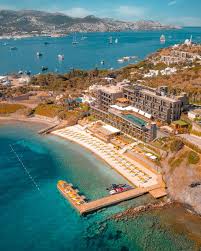
Drive to the MGallery Hotel, located just outside of Bodrum. Sea-facing rooms have been reserved. A distinctive feature of MGallery is its role as an open art gallery, showcasing over 200 curated art pieces from around the world.
Dinner at leisure
Today enjoy a one-day gulet excursion from Bodrum. Board the boat at Bodrum’s charming harbor offering views of Bodrum Castle and the whitewashed hillside homes cascading down to the sea. Our gulet has polished teak decks, a restroom and a shaded lounge area.
At midday, the gulet will anchor in a peaceful bay, and a traditional Turkish lunch will be served onboard—grilled fish, fresh mezes, seasonal salads, and fruit, prepared by the boat’s c
After lunch, the cruise continues to another secluded spot before returning back to Bodrum at the end of the day
Farewell dinner this evening.
Enjoy a beautiful breakfast.
Today we finish up the tour but participants can add on additional nights to relax and discover even more of this lovely resort area.
There are a number of direct flights from Bodrum to many European cities, or participants might want to purchase a flight segment from Bodrum to Istanbul for more time in the capitol, or to connect with a flight in that travel hub.
The Hotel staff can easily arrange individual transfers to the airport.
Cost
A non-refundable deposit of $1,000 per person is due now to book your reservation. The remaining balance is due by January 30th, 2026 or before.
Cost per person in a double is: $7,995 ($1,000 deposit plus $6,995 per person)
Cost for a single is: $8,995 ($1,000 deposit plus $7,995 per person)
Additional pre-trip nights in Istanbul and post-trip nights Bodrum to extend your visit can be purchased at an additional cost.
Tip for luggage transport and itinerary meals etc. are included. We will be collecting a form everyone a tip for our country guide who will be traveling with us throughout our journey.
You will enter some basic information and pay the non-refundable deposit. You can select to pay the deposit by ACH/US Bank Account Transfer (0% processing fee), Paypal/ Venmo (1.99% processing fee), or Credit Card (2.3% processing fee).
Academic Leadership
Maureen Healy, Professor of History
A signature of any LC Travel trip is faculty participation. Professor Healy teaches courses on the history of modern Europe. She received the Teacher of the Year Award in 2021. Her research focuses on the social and cultural history of Europe and extending into Turkey and the Ottoman Empire. Maureen’s current research project is entitled “At the Gates of Western Civilization: Islam and the Turks in Central European Historical Memory”. Her recent book was awarded the 2005 Herbert Baxter Adams Prize from the American Historical Association, and the 2005 Barbara Jelavich Book Prize from the American Association for the Advancement of Slavic Studies. We are glad that Professor Healy can join our group for this unique itinerary. We look forward to her presentations, dinnertime discussions, and plenty of informal conversations.
Accommodations
Hotel Amira, a charming boutique hotel situated in the heart of Sultanahmet, the historic district of Istanbul. Just a short walk from iconic landmarks like the Blue Mosque, Hagia Sophia, and the Grand Bazaar, this family-run hotel offers a blend of modern comfort and traditional Turkish hospitality. Enjoy the rooftop terrace which offers weeping views.
Utopia Hotel, a lovely boutique Cave hotel in Cappadocia built into the mountainside with views of the spectacular landscape. Eat a sumptuous breakfast and watch dozens of Hot Air Balloons take flight. Follow that up with an individual appointments at the hotel spa.
Nisanyan House is a charming hotel in the hillside village of Sirince just a 10-minute drive from the ancient city of Ephesus. The hotel offers a tranquil escape amid lush gardens, stone cottages, and panoramic views of the Aegean hills.
MGallery Hotel is located just outside of Bodrum. Sea-facing rooms have been reserved. A distinctive feature of MGallery is its role as an open art gallery, showcasing over 200 curated art pieces from around the world.
Terms & Conditions
Lewis & Clark College staff are coordinating this trip in partnership with the educational travel company Distant Horizons.
Reservations require a deposit of $1000 per person and an application form signed by the participant. Full balance of the trip cost is due upon receipt of invoice no later than January 30, 2026. Final balance payment must be made by check or wire transfer and should be made payable to Distant Horizons.
Health and Safety Protocols Distant Horizons will notify travelers of any requirements which travelers will have to comply with. It is important to acknowledge that travel outside of home brings risk of exposure to possible disease.
Hotel Accommodations are as listed and assume two persons sharing a twin room. A limited amount of single rooms are available at an additional cost. Distant Horizons reserves the right to substitute hotels for those named in the brochure when necessary.
Meals are coded as American Breakfast (B), Lunch (L), Dinner (D) and listed on the itinerary are included.
All Land Travel Listed on the itinerary is included, as well as entrance and admission fees to monuments and sites as listed. Two domestic flights (Istanbul to Cappadocia, and Cappadocia to ).
Tour Price Does Not Include charges for international air to and from Turkey, excess luggage charges, insurance of any kind, laundry charges, porterage at the hotel and items of a purely personal nature.
Visas: Visas are not required for U.S. citizens visiting Turkey
Tour cost is based on rates of currency exchange at time of printing (October 2025) and is subject to change with or without previous notice. If there is a price increase prior to the day of departure in the basic costs, such increases may be passed on to the participant. If bookings fall below the minimum requirement there may be a small group surcharge.
Cancellations:
Distant Horizons reserves the right to cancel any tour prior to departure for any reason, including insufficient number of participants, and to decline to accept or retain any person as a participant at any time. Should this happen, refunds will be made without obligation, although we cannot be held responsible for any additional costs already incurred by participants.
If a participant cancels, the following refunds will be available upon written notice of cancellation to Distant Horizons.
Notice more than 90 days prior to departure: a refund less a $500 cancellation penalty.
Notice between 90 days and 61 days prior to departure: a refund less 50% of trip price.
Notice between 60 days and 31 days prior to departure: a refund less 75% of trip price.
No refund shall be issued if cancellation is received less than 30 days prior to departure date.
No refunds shall be issued after the tour has commenced. No refunds shall be issued for occasional missed meals, sightseeing tours or any unused services.
Air Carriers Contract: The airlines concerned are not to be held responsible for any act, omission or event during the time tour members are on board their planes or conveyances. The passage contract in use by the airline concerned when the ticket is issued shall constitute the sole contract between the airline and the purchaser of these tickets and/or the passenger.
Responsibility
Distant Horizons and the Lewis & Clark College act only in the capacity of agents for the hotels, airlines, bus companies, railroads, ship lines or owners or contractors providing accommodations, transportation, or other services. As a result, all coupons, receipts or tickets are issued subject to the terms and conditions specified by the supplier. By acceptance of tour membership, the participant agrees that neither Distant Horizons nor the Lewis & Clark College nor any of its subsidiaries shall become liable or responsible for personal injury, damage to persons or property, loss, delay or irregularity caused by persons not controlled by it, such as (without limitation) airlines, bus and shipping companies, suppliers of accommodations or other services, or resulting from any acts of God, defects in vehicles, strikes, wars, whether declared or otherwise, civil disturbances, medical or customs regulations, acts of terrorism, epidemics or government restrictions. Distant Horizons and Lewis & Clark College cannot be held responsible for unfavorable weather or closure of access routes due to bad weather conditions. Distant Horizons and Lewis & Clark College are not responsible for any additional expenses or liability sustained or incurred by the participant as a result of the above-mentioned causes.
Tour participants will receive these terms after making deposit in a format that allows them to acknowledges receipt of a copy of these terms and conditions and signifies acceptance of, and consents to, all of the terms and conditions set forth herein, on behalf of any participants they may act for and for themselves when registering for, or making payments on, this tour.